The Challenge
Design 2–3 complete looks that move effortlessly through:
- A morning workout
- Remote work or study in a café
- Social time with friends
The solution needed to balance performance, wearability, and commercial appeal, while minimizing friction between activities.
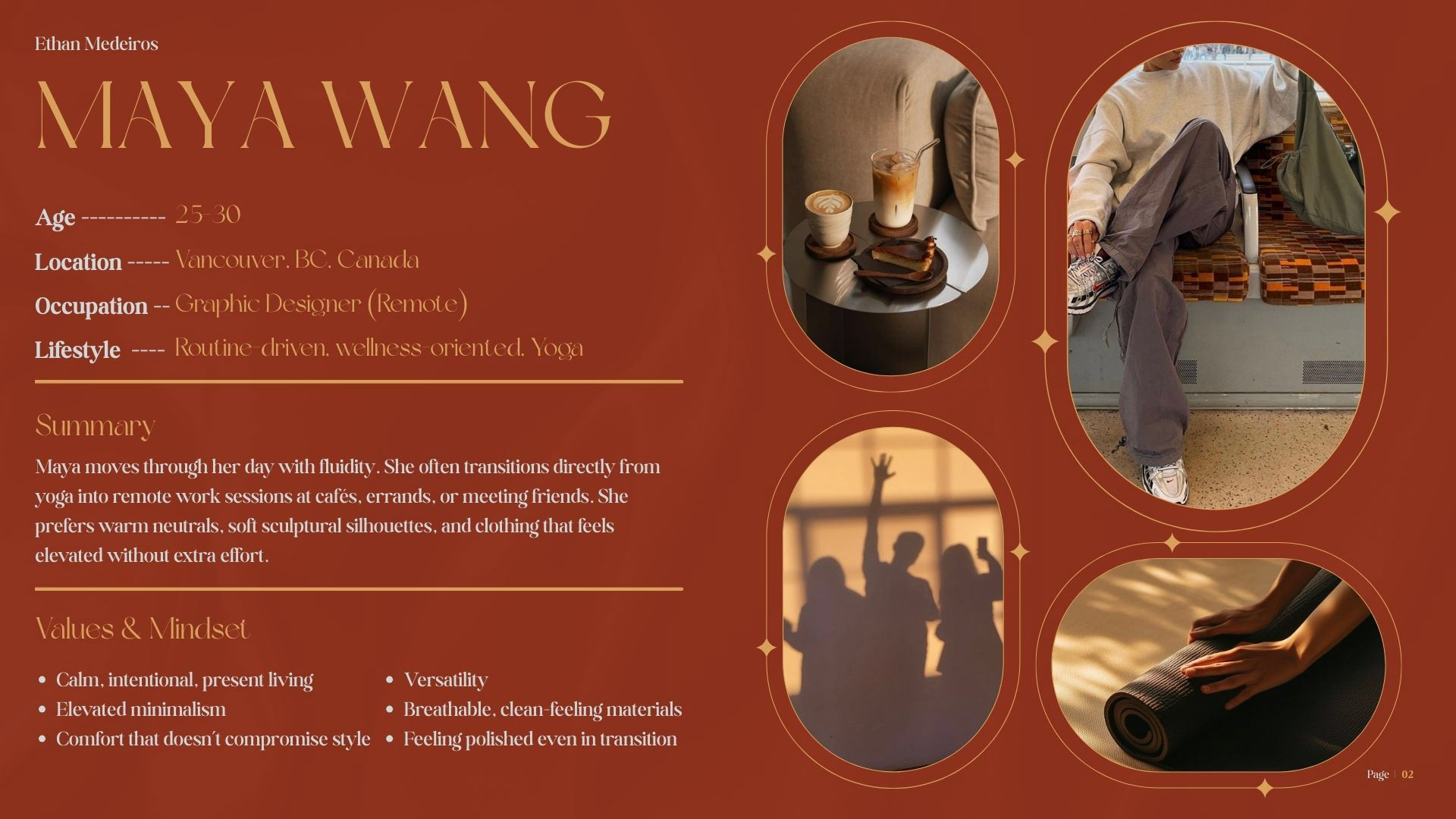
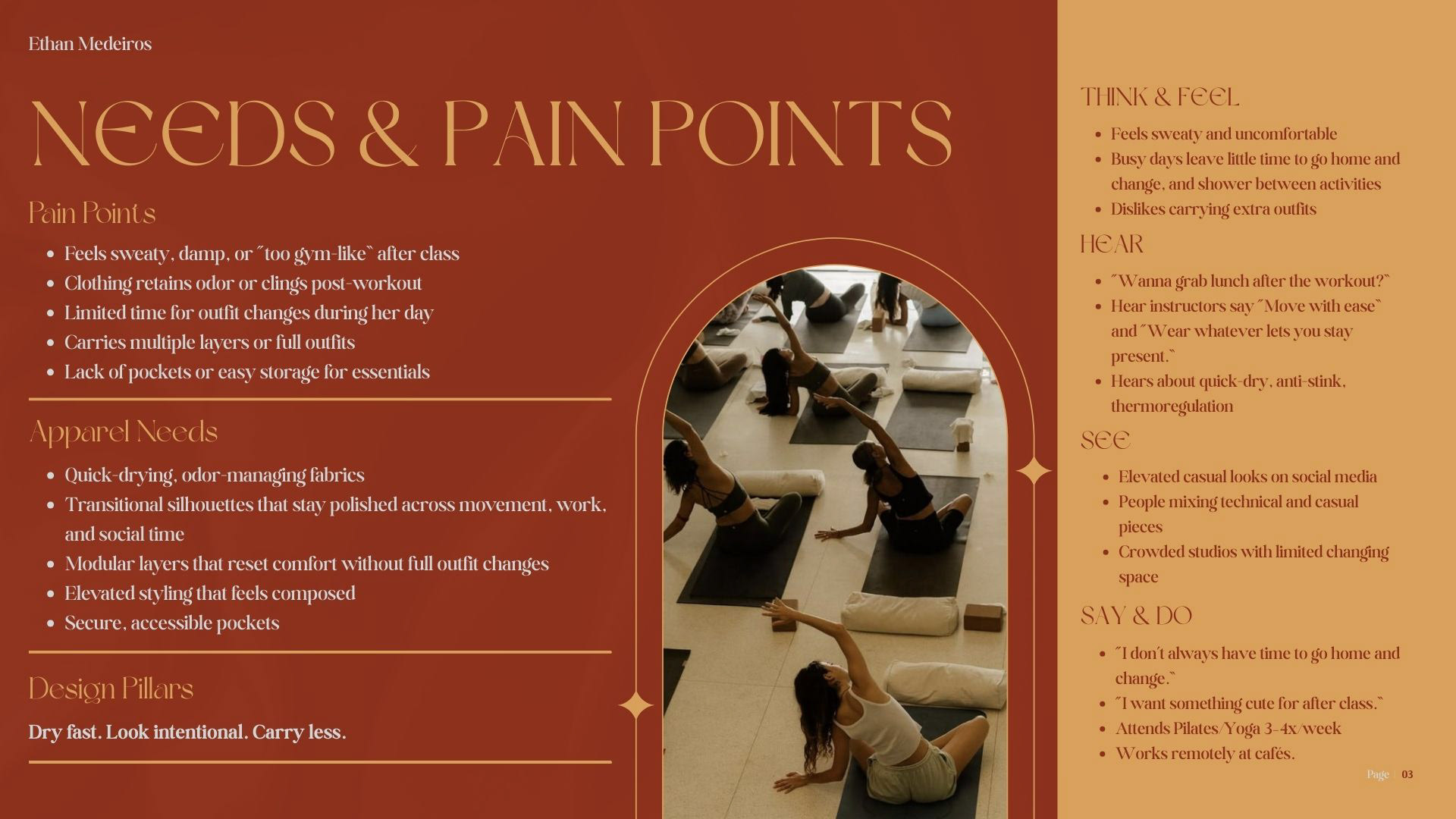
This project is grounded in the daily reality of a young professional who moves directly from studio workouts into work and social settings, often without the time or space to change. Research focused on identifying moments of friction, particularly discomfort after movement, limited opportunities for change, and the need to carry fewer items throughout the day.
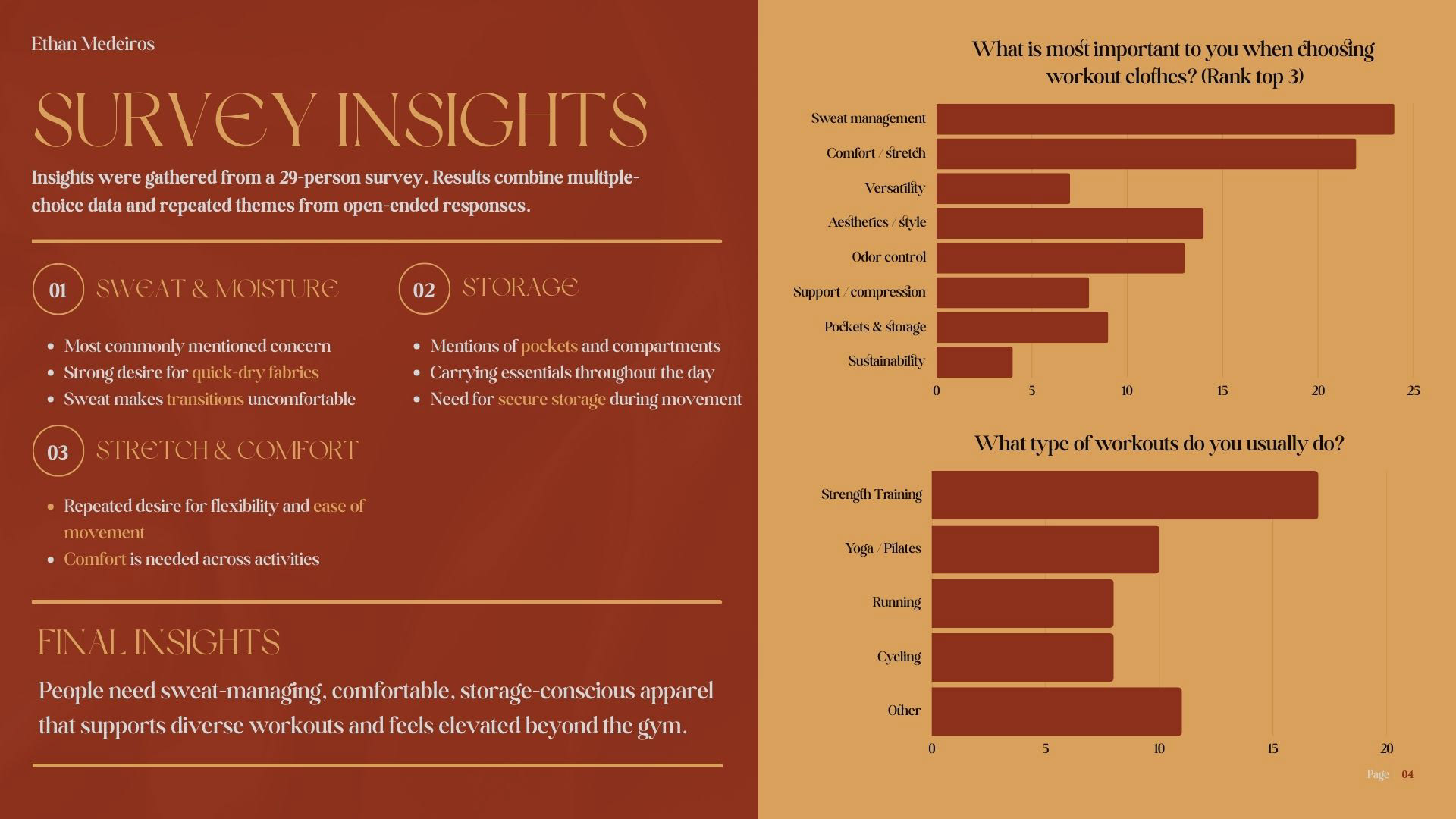
A brief survey was conducted to validate initial assumptions and ensure that design decisions aligned with actual habits regarding sweat management, comfort, versatility, and storage across various types of workouts.
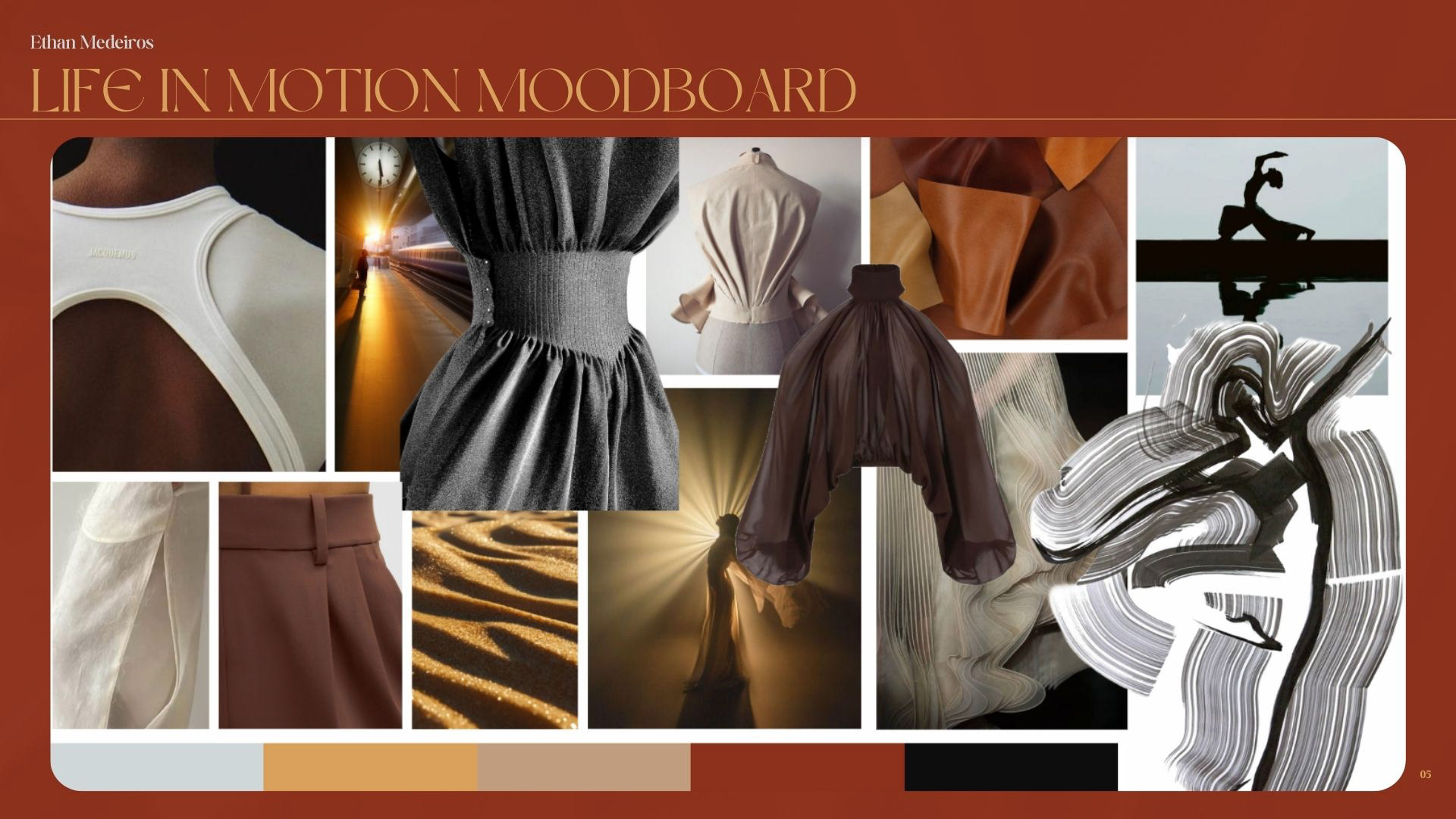
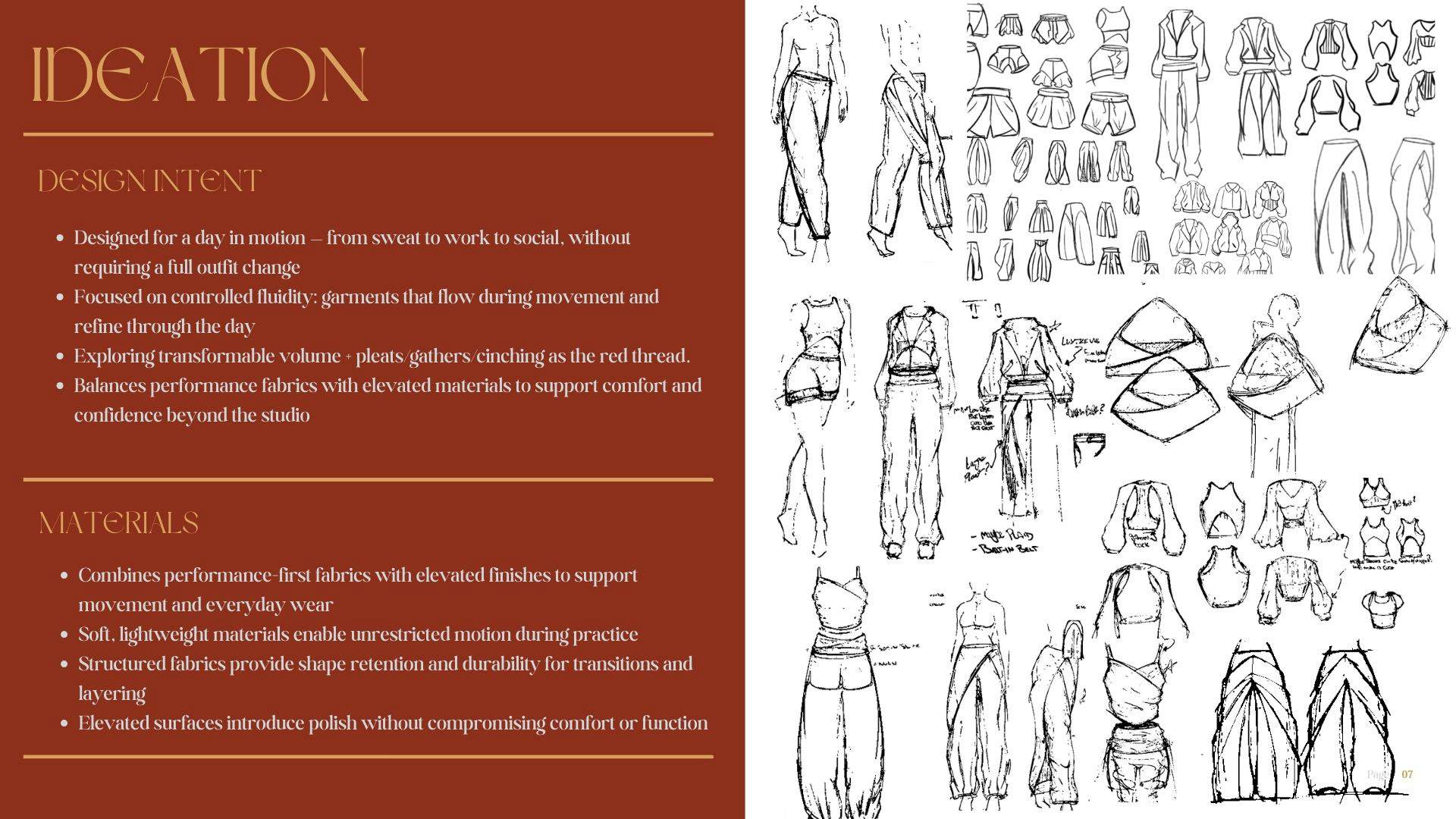
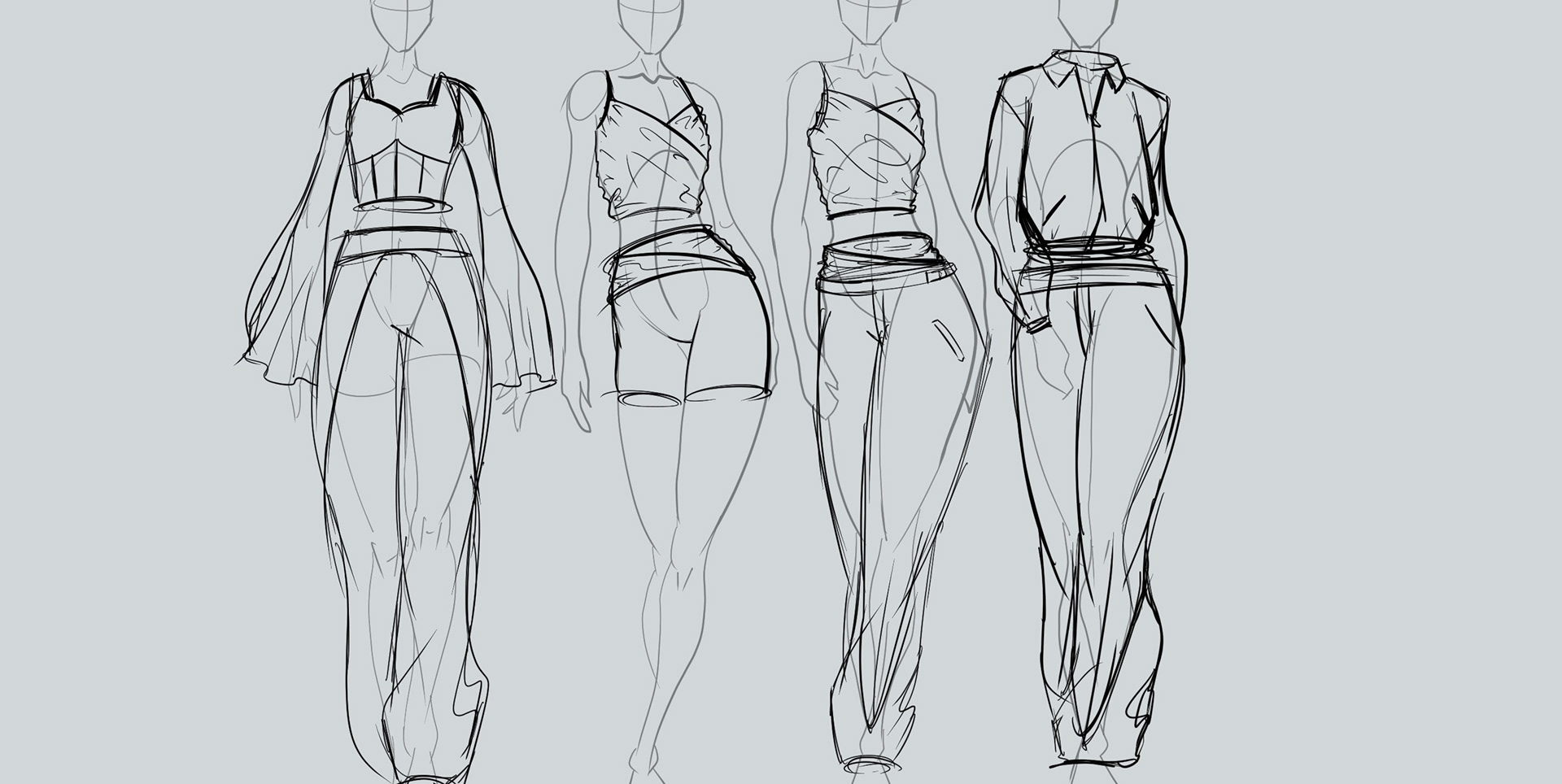
The visual language emphasizes controlled fluidity, balancing expressive movement with refinement, to ensure the collection feels elevated beyond the studio. The system is structured as two core looks supported by a shared modular layering approach, using subtle volume control rather than full outfit changes to adapt across the day.
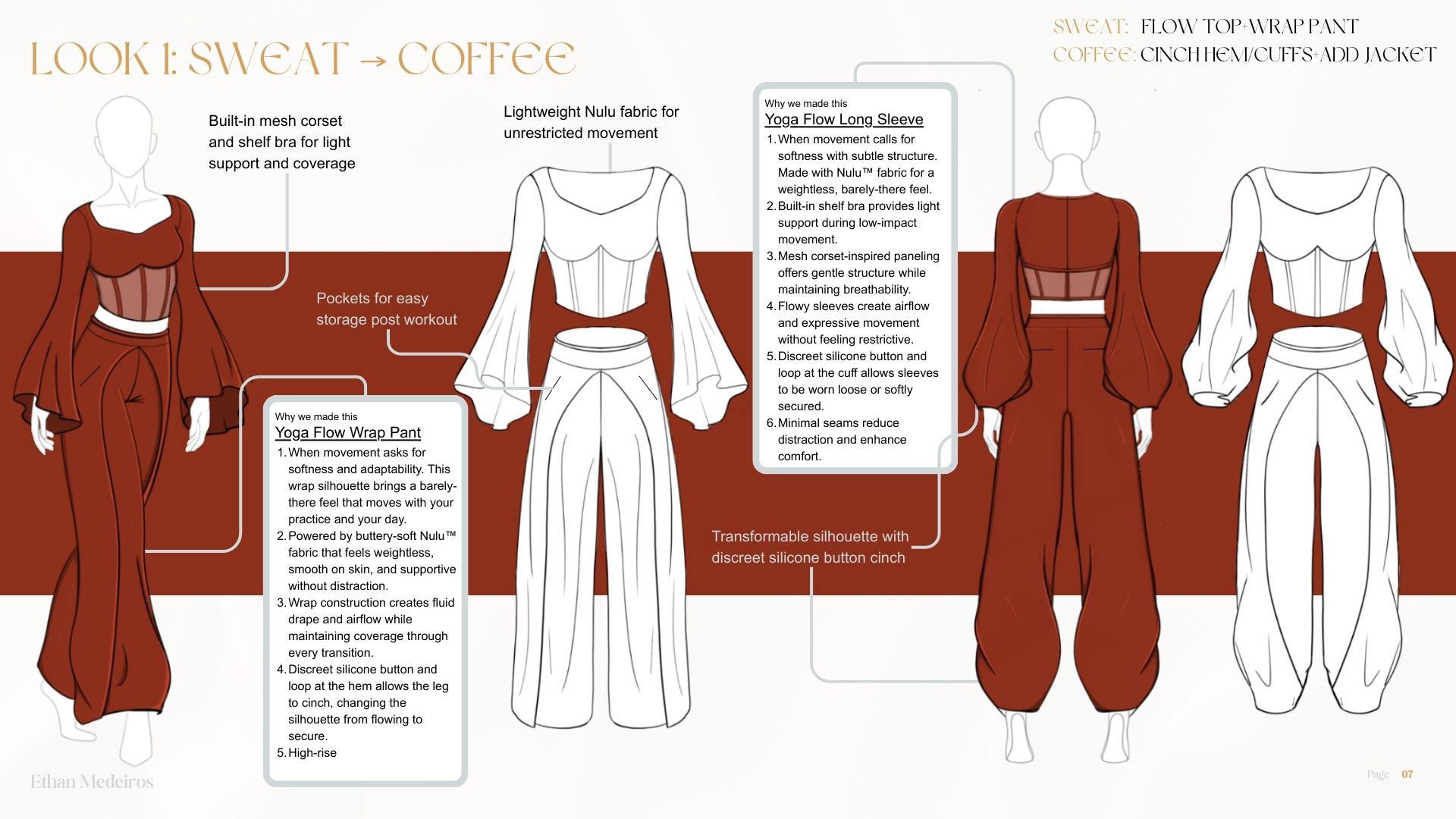
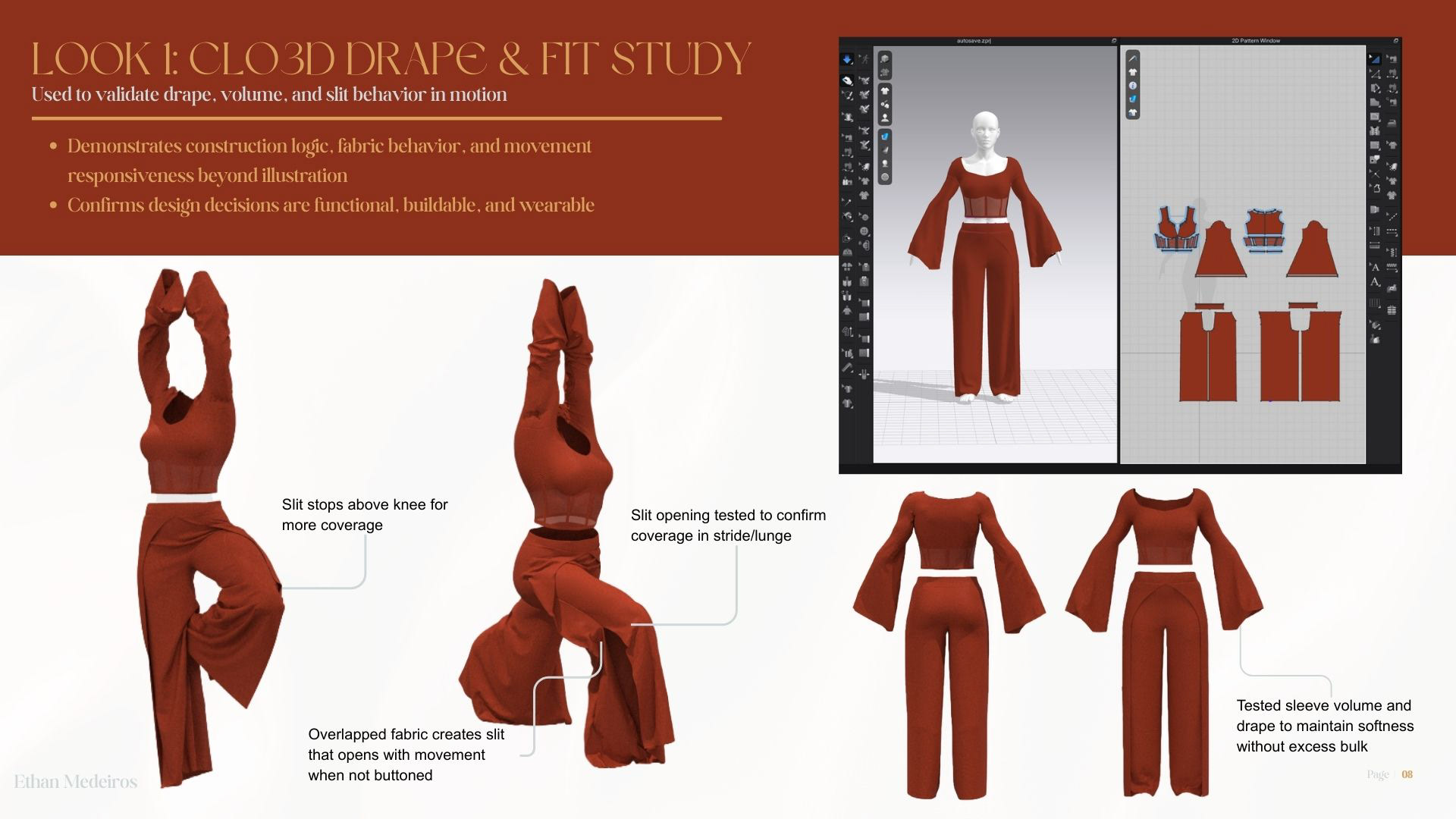
The first look prioritizes comfort and softness during movement while allowing simple adjustments to refine the silhouette post-workout. Digital drape and fit testing were used to validate volume behavior, coverage, and movement response, ensuring the garments remain wearable and buildable beyond illustration.
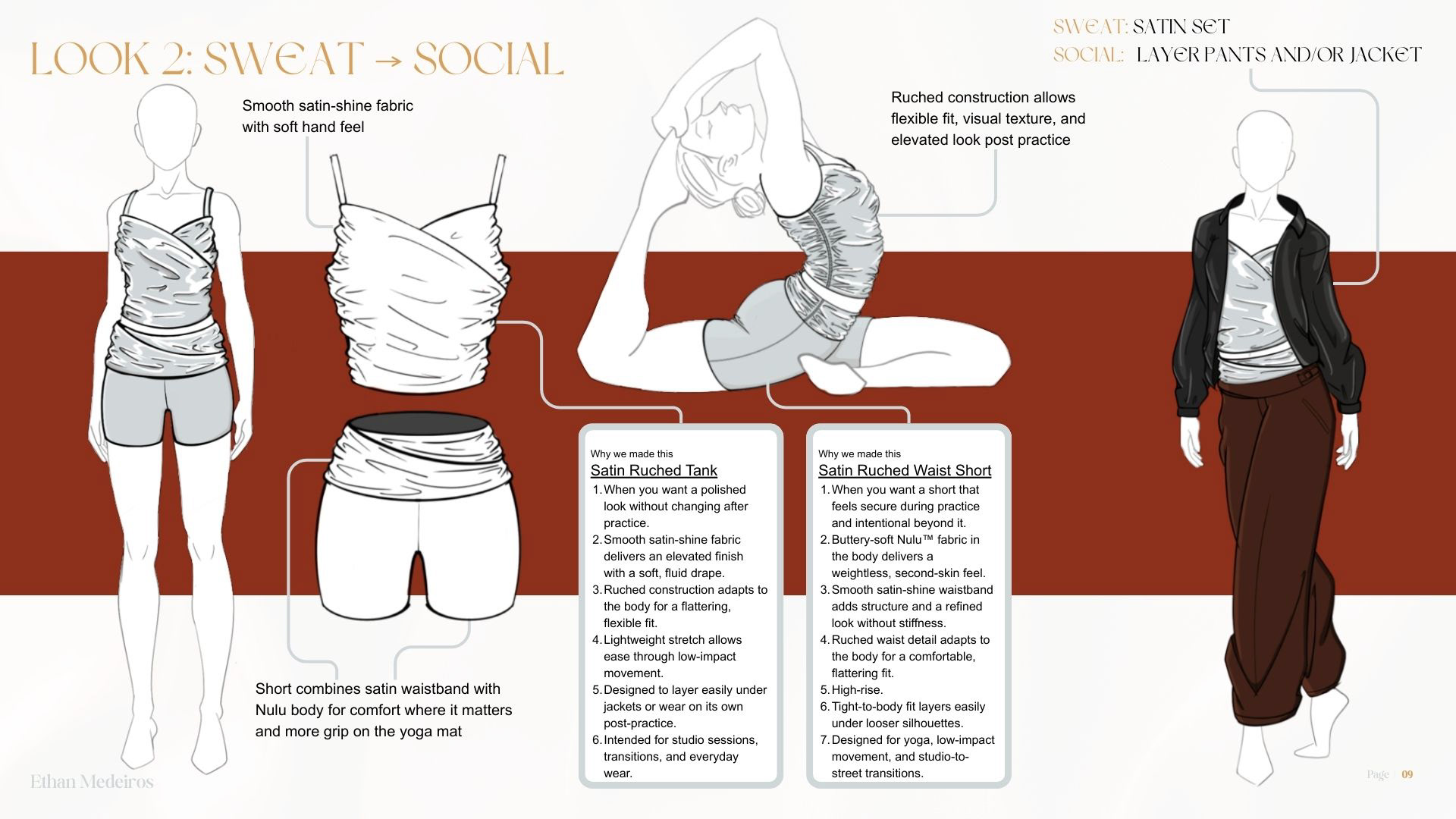
The second look introduces elevated materials and texture to support social settings, allowing the outfit to feel intentional after movement while maintaining comfort and ease during low-impact activity.
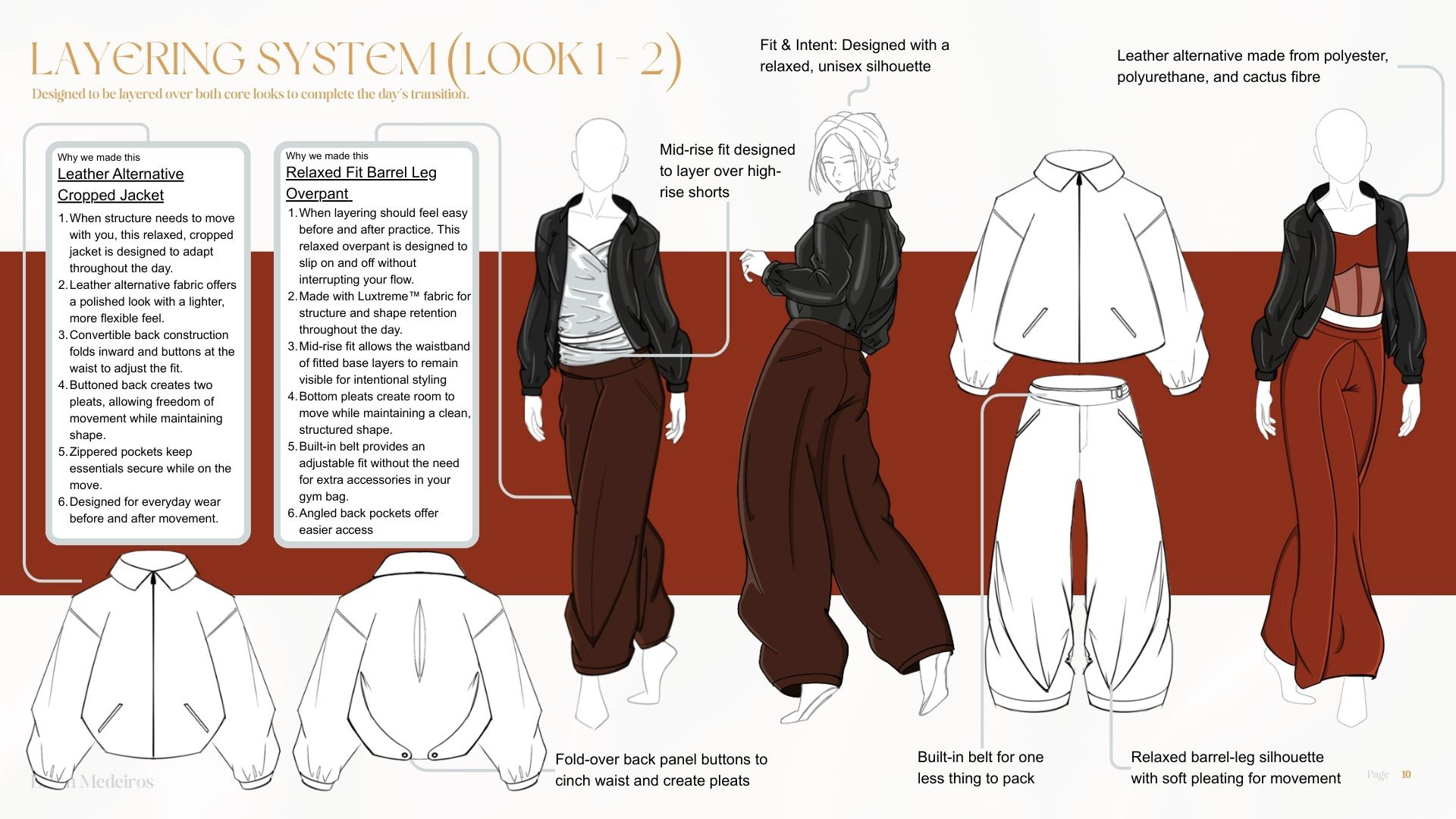
The layering system is the core mechanism that allows both looks to function outside the gym. Shared outer layers and over-pieces introduce structure, coverage, and storage while remaining easy to add or remove, enabling the base garments to transition seamlessly into work and social contexts.
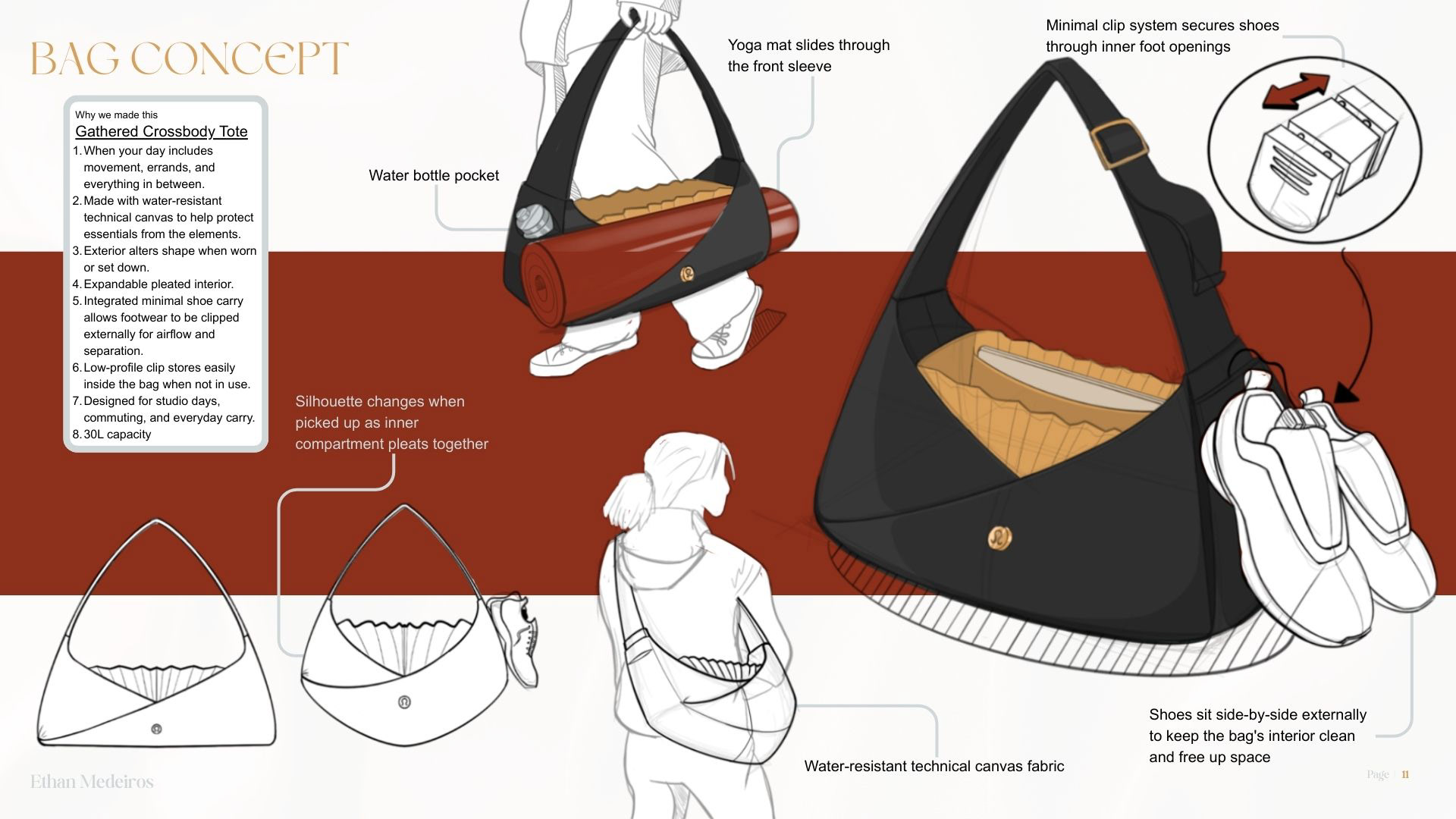
A supporting bag concept was developed to address storage and separation needs throughout the day, reinforcing the transition-first mindset without interrupting the apparel system.
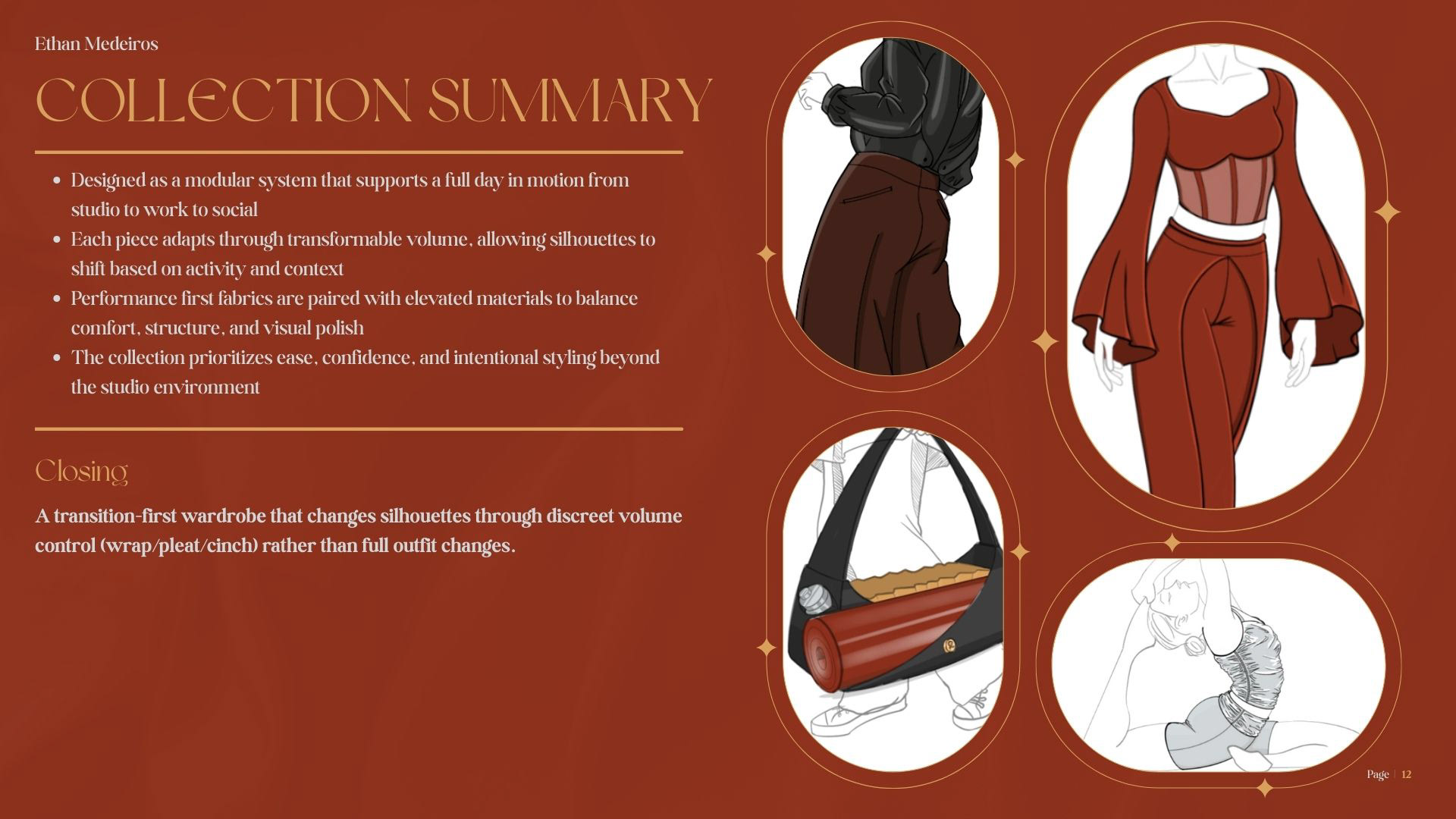
Life in Motion demonstrates how modular layering can enable apparel to move beyond the studio, supporting real-world transitions through thoughtful hierarchy, reuse, and restraint.